Your “Why”: Live a life of courage and purpose

A clear "why" can transform your career, and your life.

Eddie Eng

The "Why" Impact

McKinsey research shows that more than 70% of employees say their personal sense of purpose is defined by their work. What is your personal sense of purpose? I love what Simon Sinek said: if you want to feel an undying passion for your work, and if you want to feel that you are contributing to something bigger than yourself, you need to know your "why."

What is your "why"? It was my "why" that led me to start Cadence Culture. I never thought of starting a company because, for the last 14 years, I led and built an incredible team. I was with a great company, surrounded by awesome colleagues and clients who appreciated and recognised my work. So, why step out of my comfort zone? Why leave such a good place to start a new business in uncertain times and a challenging economy? This is the power of knowing my "why"—it gives me the courage to step out of my comfort zone and fulfil my calling.

Eddie Eng

The Power of "Why"

My "why" is to journey with a community of culture builders—people who believe in creating work cultures where individuals are fulfilled, and businesses thrive. This is what makes me come alive.

My "why" produces three things:

  1. Call: My "why" is my calling, and it gives me the courage to step out of my comfort zone to fulfil my purpose. It also shapes my resilience and perseverance, helping me overcome challenges and stay grounded.challenges. It acts as my core, providing strength.
  2. Compass: My "why" also serves as my compass. It gives me greater clarity, helping me prioritise and stay focused.
  3. Character: My "why" shapes who I am called to be. It forms my values, beliefs, and practices.

This is the power of knowing your "why"—it gives you the courage to step out of your comfort zone and fulfil your calling.

Calvin Yeo

Knowing Your "Why"

Ever felt the meaninglessness at work when you're doing everything you're asked to, but still wonder, "What's the purpose of all this? Where is this going?"

Many people experienced this during the COVID years, leading to a sense of languishing in their hearts, minds, and souls. This highlights the importance of knowing our "why" at work.

Sixteen years ago, I had a midlife crisis that led me to discover my own "why"—my calling, or life mission—to be a people builder. This realisation caused me to pivot from my business-building years in the telecoms industry to focus on sowing into the lives of people, helping them navigate the most challenging aspect of work: working with others. This has brought me the greatest joy in what I do now at Cadence Culture.

What about you? Have you discovered your "why" at work? If you have, how did you do it? If you haven’t, what are you doing to find your "why"?

Discovering your "Why" often begins by listening deeply to ourselves—our hearts, our minds, and our souls.

Calvin Yeo, Co-Founder

Calvin Yeo

Discover Your "Why"


How does one discover their "why" at work? It often begins by listening deeply to ourselves—our hearts, our minds, and our souls. Within each of us, there are talents, joys, pains, and personality traits that can guide us.

  • Talents are the things you’re naturally gifted at doing.
  • Joys are what give you true fulfilment.
  • Pains are the brokenness in the world that grieves your heart.
  • Personality shapes how you think and engage with the world.

Finding the intersection of these four spheres might point us to our "why." I discovered my "why" 16 years ago, and it has sharpened over time. Now, in this final third of my working life, I’m committed to living out my calling as a courageous peacemaker and culture strategist—restoring, revitalising, and strengthening relationships and culture to bring out the best in people and performance.

What about you? What are your talents, joys, pains, and personality? How might they point you to your "why" at work?
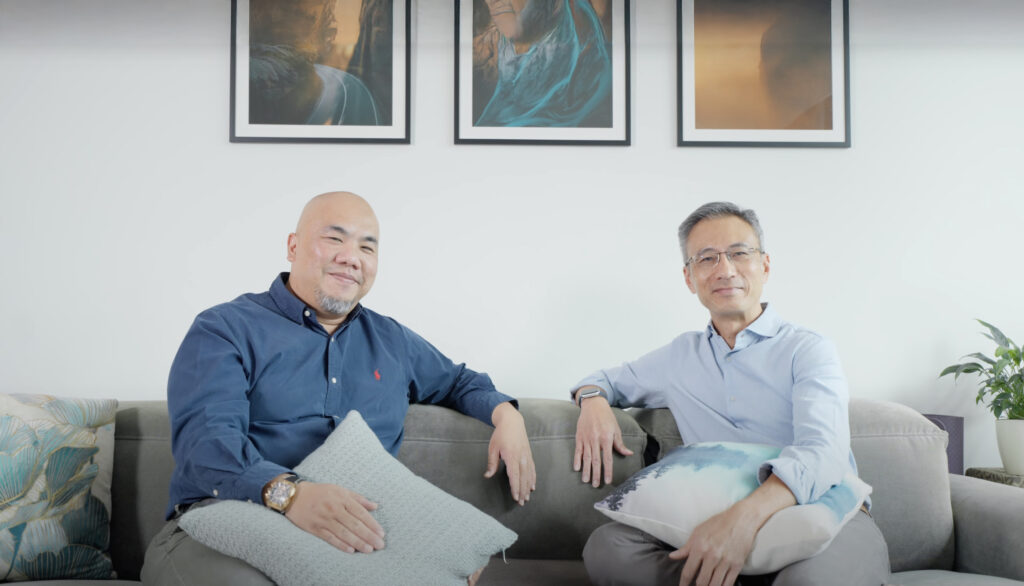
Eddie Eng and Calvin Yeo have an open conversation about the journey of starting Cadence Culture

Cadence Culture Dialogue Ep. 1: Our Journey

Welcome to the Cadence Culture dialogue.

It's a dialogue on how we can be culture builders in our workplaces.


To be culture builders, there are skill sets that we need to strengthen. For example, the ability to communicate what organisational culture is and its value to people and business growth, the ability to create psychological safety, and to have quality conversations.

We invite you on this journey with us.

CADENCE CULTURE DIOLOGUE - EPISODE 1

The Power of Knowing Your "Why" and How It Led To The Starting of Cadence Culture

The reality is this: work culture is a force that shapes us. We are the product of our work culture.

Eddie Eng, Co-Founder

Transcript

Calvin: Eddie, I've worked with you for more than a decade. In the last 14 years that you were with this consultancy, you built an incredible training team. You created a culture that has won Great Place to Work multiple times over, and your work is recognised by both your colleagues and your clients. What led you to start Cadence Culture with me?

Eddie: You know, I'm really grateful, right? In fact, the incredible outcome is not mine alone. Yeah, you were part of that success, and so were many of our colleagues. And come to think of it, one of the reasons is because you're my buddy, right? This is true, but there’s more. The critical factor is really about knowing my why. Because you’re right. I was really comfortable and thriving in the work that I do, and I never thought of starting a company. You think about it—why start a business in this very challenging, uncertain economy? There’s so much risk that we need to take on. And of course, why put our friendship to the test?

Calvin: Well, thankfully, our friendship has stayed intact. So I hear that it's your why that led you to this decision. Share with us, what is your why?

Eddie: My why is really to journey with a community of culture builders who believe in building work cultures where people are fulfilled and businesses flourish. This is what makes me come alive. You know, I've dedicated 18 years to people development, and I realised one critical factor that influences the effectiveness of people development: it’s the work culture. You think about it—you know, we send people for training, for example, to learn design thinking. But if our work culture values stability and there’s no real room for risk-taking, people will do the same thing again and again. It’s just a matter of how well they do it, but there's no room to try new things. When this person returns from training and tries to apply what they’ve learnt, they will face pushback. The reality is this: work culture is a force that shapes us. We are the product of our work culture. So, Calvin, what about you? What led you to start Cadence Culture with me? What is your why?

Calvin: Eddie, you know, I’m not the entrepreneur sort of guy. I've been working in multinationals for most of my career, and I never dreamt of starting anything—not especially at my age of 56. But I realised that I needed to continue stewarding my giftings and my experience in order to strengthen these twin aspects of leadership and culture so as to benefit organisations and people. In this final third of my work life, I'm recentering myself in my calling to be a courageous Peacemaker and culture strategist—to work with organisations to restore, revitalise, and strengthen relationships and culture in order to bring out the best in people and performance.

Eddie: You know, Calvin, you are surely a culture strategist. I mean, I see how you integrate your business experience, your strategy consulting, and culture consulting—how you put all three together. Wow.

Calvin: Thank you, Eddie, and it’s my why. When you invited me to start this new consultancy with you, it was really for me to live out my why.

Eddie: I love this calling—the courageous Peacemaker and culture strategist. You need to put this on your calling card! You spoke about being a culture strategist, but what about courageous Peacemaker?

Calvin: Well, in organisations, as people work together and bring the best of their ideas, there is bound to be conflict—between teams and within organisations. Peacemaking is really a process of restoring relationships through healthy conflict in order to strengthen those relationships, which then become the foundation upon which we build culture.

Eddie: Indeed. Without healthy relationships, there is no culture. I have the privilege of being in the front row, seeing you in action—how you facilitate, consult, and coach your clients to restore relationships and shape their culture to deliver their strategy.

Calvin: Thank you, Eddie. I remember one particular client, a finance leader. She said that her top management was a separate layer, and people were not talking to them—a very top-down culture. But ever since her team worked with us, she mentioned that the layer was gone. Now, people are able to interact freely with the top management. This is the type of work that really gives us meaning, and we can only do what we do because we know our why.

Eddie: Thank you, Calvin, for reminding me about the power of knowing our why. We'd love to hear from you. What is your why? Why do you do what you do? Share with us in the comments.

Calvin: Yes, share with us. And do look out for the next Cadence Culture dialogue. We’re going to talk about the power of organisational culture.

Eddie: Let's continue to make a difference in our work cultures and our workplaces. Thank you for joining us.

Calvin: Goodbye. See you at the next dialogue.

As people work together and bring the best of their ideas, there is bound to be conflict—between teams and within organisations. Peacemaking is really a process of restoring relationships through healthy conflict in order to strengthen those relationships, which then become the foundation upon which we build culture.

Calvin Yeo, Co-Founder