Cadence Culture Dialogue Ep. 4: The Power of Quality Conversations

Welcome to the Cadence Culture Dialogue.
It's a dialogue on how we can be culture builders in our workplaces.
To be culture builders, there are skill sets that we need to strengthen. For example, the ability to communicate what organisational culture is and its value to people and business growth, the ability to create psychological safety, and to have quality conversations.
We invite you on this journey with us.
The Power of Conversations
The way we talk shapes relationships and outcomes. The way we talk influences how others experience us and reflects on our brand and reputation.
Eddie Eng, Co-Founder
Transcript
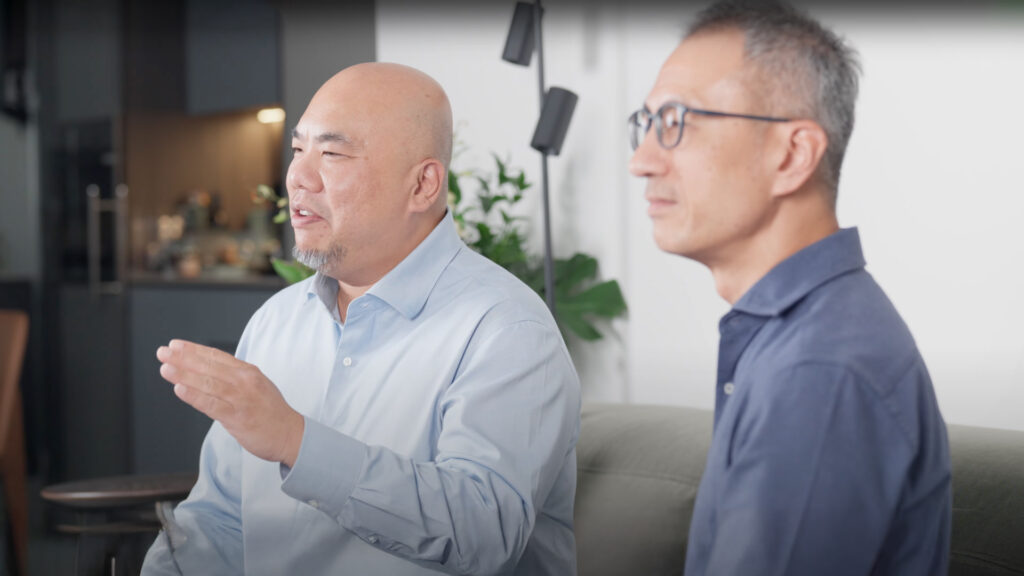
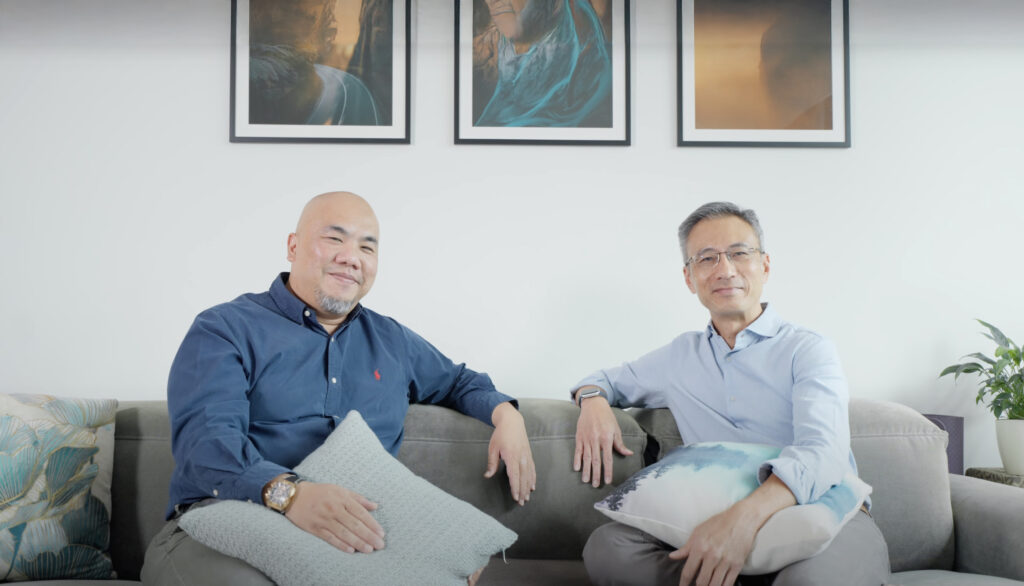
Calvin: Welcome to the Cadence Culture Dialogue. It's a dialogue about how we can be culture builders in our workplaces. The previous dialogue was about organisational culture, so if you've missed it, check it out.
Click here to view the previous episode.
Eddie: Today's dialogue is about the quality of conversations at work. Please share with us your perspectives, questions, and comments.
Calvin: Let me begin with a question. Eddie, what is your view on improving the quality of conversations at work?
Eddie: Everything is influenced by the quality of conversations at work. According to research conducted by U.S. firm Gartner, poor communication is responsible for 70% of corporate errors. On the other hand, quality conversations that lead to well-connected teams can increase productivity by 20-25%, based on a McKinsey report.
Calvin: Wow, indeed. Our ability to have quality conversations at work is a powerful catalyst for achieving good work results.
Eddie: The way we talk shapes relationships and outcomes. The way we talk influences how others experience us and reflects on our brand and reputation. Calvin, how do we improve the quality of conversations?
Calvin: The quality of conversations is closely linked to how we talk. We don't lack the ability to talk, but what we do lack is the awareness of how we talk and the capability to do it better. Did you know that most of our talk is habitual and fixed? We don't even think about how we talk—we just talk.
Imagine if we could shift our talk from being unconscious to conscious, from being fixed to fluid. You could then adapt your conversational prowess to different situations and personalities. You could target your talk to be more effective and strategic. That way, you can foster more predictable and positive results in your conversations—both at work and in life.
Eddie: Amazing things can happen when the quality of conversations is great. I love this quote from Kevin Eyre, the creator and founder of SoundWave. SoundWave is a powerful tool that measures the nine voices in each of us. What are the nine voices, Calvin?
Calvin: Bro, you're testing me here. The nine voices are divided across three verbal styles: Ask, Suggest, and Tell.
The Ask Voices are Inquire, Probe, and Diagnose.
The Suggest Voices are Articulate, Advise, and Advocate. The three A’s.
The Tell Voices are Critique, Correct, and Challenge — the three C's.
Now, some of us intuitively have a sense of what these voices are, but only through a SoundWave learning journey will we get a deeper understanding of these nine voices. We also get a deeper awareness of the voices that we use. So each one of us has a Brilliant Three—our top three voices that we use most often. We also discover what are some of the voices that we run the risk of overusing, which has a negative impact, as well as the voices that we run the risk of underusing, preventing us from having a more effective outcome.
Eddie: I can think of one conversation that didn't go well. I was with a client, and you know, my top voice is the Advocate voice, and I would use my top voice to persuade my clients to take action. However, in this situation, the client wasn't too keen on my suggestion and pushed back with a long silence. Guess what voice came out of me so naturally and immediately?—Advocate voice.
Calvin: So with SoundWave, right, how did you adapt in that situation?
Eddie: Based on my natural self, when a person pushes back against my suggestion, I will Advocate with greater intensity, and the conversation will reach a standstill. With training from SoundWave, there is a greater awareness when a voice is not connecting with the other person, and to adapt by applying another voice, such as the Inquire voice, to seek to understand rather than to advocate my point of view. And you know what? It is amazing to experience how by applying a different voice, it leads to a very different outcome—greater engagement in the conversation.
Calvin, can you give us an example of how a SoundWave learning journey helped a company or a team to strengthen the quality of conversations at work?
Calvin: There was a workshop that we conducted recently. This was with an American MNC, and they were a regional sales team with about people from 10 countries around the region. So they are experts in their field of work, and many of them would leverage their experience and their expertise to Advise, Advocate, Correct, and even Challenge the people that they were engaging with, you know, that they were speaking with.
And what they realized through SoundWave was that they were underusing their Ask voices of Inquire, Probe, and Diagnose, and they were also not using one particular Suggest voice, which is called Articulate—being able to play back what they hear the other person saying.
Because of that, what happened is that all their efforts in trying to solution didn’t hit the nail on the head, because they didn’t quite understand the other party’s challenges, perspectives, and concerns, and therefore, they were not able to really resolve issues in a timely manner. They were not able to get through what they wanted to achieve.
But through SoundWave, realizing that they needed to turn on their Ask voices, after the workshop, for the next 90 days, that’s what they began to do. They began to use their Ask voices and Articulate voice, complementing their Advise, Advocate, Correct, and Challenge voices. And in so doing, they had much more effective conversations.
Eddie: I can imagine that. I'm curious to find out—what are the business outcomes that they achieved in this process?
Calvin: Through this process, over that 90 days, they were able to win new customers that they wanted to. They were able to retain some of their existing clients that were under competitive pressure, and within the organization, they were able to strengthen cross-team collaboration, plus improve performance management of their staff.
Eddie: The application of SoundWave is even more powerful when we look at helping organizations increase the quality of conversations in specific areas of need, such as developing the leadership team, culture, performance, coaching, stakeholder management, giving and receiving feedback, selling with confidence, and delivering the best customer experience.
Calvin: So Eddie, how does all this, which is related to the quality of conversations, link back to the core of what we do at Cadence Culture, which is culture building?
Eddie: The quality of a culture is defined by the quality of relationships, and the quality of relationships is defined by the quality of conversations.
Calvin: That is so true. So therefore, one way to strengthen culture is to work on the quality of conversations. Let's continue to do that—to strengthen the quality of conversations, one conversation at a time.
Eddie: Deepening the quality of conversations is at the core of what we do, and we keep working on it to get better.
Come journey with us at Friends of Cadence Culture.
Calvin: Yes, we welcome you to join us as Friends of Cadence Culture. Do look out for the next Cadence Culture Dialogue. See you soon. Goodbye.
The quality of a culture is defined by the quality of relationships, and the quality of relationships is defined by the quality of conversations.
Eddie Eng